Lower Secondary Mathematics · Sec 1 & 2 · Jurong West

Secondary 1 & 2 Math Tuition in Jurong West

Build strong mathematical foundations from Secondary 1, develop confidence in problem-solving, and prepare for the challenges of upper-secondary Mathematics with Teacher Karen.
Explore Math Resources

Meet Your Math Tutor

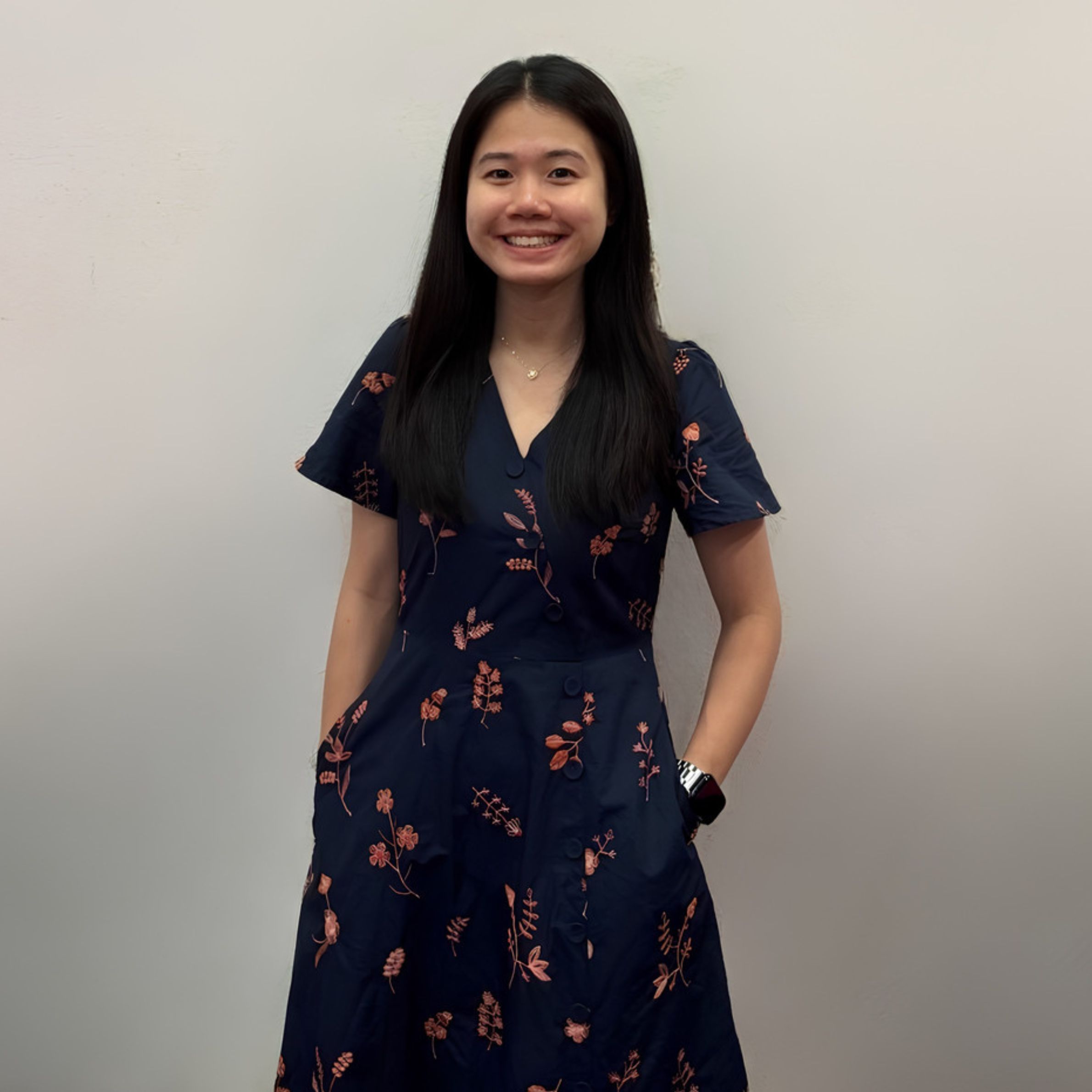
Teacher Karen

Teacher Karen

Foundations First, Confidence Always

Karen helps Sec 1 and Sec 2 students build strong Mathematics foundations through clear explanations and a supportive classroom culture. Students feel comfortable asking questions and working through mistakes together.

  • Full-time educator · 8 years of teaching experience
  • Secondary Level: Math and Science

Strong Student Relationships

Karen builds positive connections with students so lessons feel approachable and engaging.

Clear Explanations

Concepts are broken into manageable steps with guided examples before independent practice.

Confidence & Progress

Regular practice and encouragement help students grow in problem-solving confidence. Karen has a verified track record of helping students achieve strong results—WhatsApp to discuss your child's goals.

Math Resources & Downloads

Lower Secondary Mathematics Syllabus

MOE G2 & G3 Mathematics

Official syllabus documents for G2 and G3 Mathematics across Secondary 1 and 2.

View / Download Syllabus

Mathematics Formula & Revision Sheet

Key formulae and revision notes for lower secondary Mathematics.

Coming Soon

Secondary 1 & 2 Mathematics Practice Papers

Practice papers with questions and solutions for Sec 1 and Sec 2 revision (uploads planned).

Coming Soon

Explore Lower Secondary Mathematics

Topics are organised from the official MOE G2 & G3 Mathematics syllabuses. Schools may teach topics in a different order—use the filters to focus on Sec 1, Sec 2 and course level. Official syllabus PDF

Year level
Course

N1 · Number and Algebra · Sec 1

Primes, integers and rational numbers

Working with whole numbers, integers, primes, HCF, LCM and rational numbers on the number line.

Key learning objectives
  • Perform calculations with integers and rational numbers.
  • Use prime factorisation to find HCF and LCM.
  • Compare and order rational numbers.
Key mathematical skills
  • Four operations on integers
  • Prime factorisation
  • HCF and LCM
Topical practice

Concept breakdown

Integers include negative numbers. When adding a negative, move left on the number line; subtracting a negative is equivalent to adding.

Guided worked example

Evaluate (−3) + 5 − (−2).

  1. (−3) + 5 = 2
  2. 2 − (−2) = 2 + 2 = 4

Answer: 4

Try it yourself

Find the HCF of 12 and 18.

Hint

List factors or use prime factorisation: 12 = 2²×3, 18 = 2×3².

Answer

6

N2 · Number and Algebra · Sec 1

Real numbers and approximation

Representing numbers on a number line, rounding and estimation.

Key learning objectives
  • Round numbers to a required degree of accuracy.
  • Estimate results of calculations.
  • Recognise irrational numbers such as √2 on the number line (G3).
Key mathematical skills
  • Significant figures
  • Rounding
  • Estimation

N3 · Number and Algebra · Sec 1

Ratio, rate and proportion

Comparing quantities, sharing in ratio, and rates in everyday contexts.

Key learning objectives
  • Express relationships as ratios in simplest form.
  • Solve problems involving direct proportion.
  • Apply rates in speed and other contexts.
Key mathematical skills
  • Simplify ratios
  • Divide in a given ratio
  • Unit rates

N4 · Number and Algebra · Sec 1, Sec 2

Percentage

Percentage of a quantity, increase/decrease, and simple financial contexts.

Key learning objectives
  • Calculate percentage of a quantity.
  • Solve problems involving percentage increase and decrease.
Key mathematical skills
  • Percentage change
  • Reverse percentage (G3)

N5 · Number and Algebra · Sec 2

Standard form (G3)

Writing very large and small numbers in the form a × 10ⁿ.

Key learning objectives
  • Express numbers in standard form.
  • Perform basic operations with numbers in standard form.
Key mathematical skills
  • Convert to and from standard form
  • Calculate with standard form

A1 · Number and Algebra · Sec 1, Sec 2

Algebraic expressions and formulae

Using letters to represent numbers, substitution, and simplifying expressions.

Key learning objectives
  • Simplify algebraic expressions by collecting like terms.
  • Substitute values into formulae.
  • Expand and factorise linear expressions (G3 Sec 2).
Key mathematical skills
  • Like terms
  • Substitution
  • Expansion and factorisation (Sec 2)
Topical practice

Concept breakdown

Like terms have the same variable part. You can only add or subtract like terms: 3x + 2x = 5x, but 3x + 2y stays as 3x + 2y.

Guided worked example

Simplify 4a + 3b − 2a + 5.

  1. Group like terms: (4a − 2a) + 3b + 5
  2. = 2a + 3b + 5

Answer: 2a + 3b + 5

Try it yourself

If x = 2, find the value of 3x + 7.

Hint

Substitute x = 2 into the expression.

Answer

13

A2 · Number and Algebra · Sec 1, Sec 2

Linear equations and inequalities

Solving linear equations in one unknown and simple inequalities.

Key learning objectives
  • Solve linear equations in one unknown.
  • Form equations from word problems.
  • Represent and solve linear inequalities (G3).
Key mathematical skills
  • Balance method
  • Word problems
  • Number line for inequalities

A3 · Number and Algebra · Sec 2

Simultaneous linear equations (G3)

Two equations in two unknowns — substitution and elimination methods.

Key learning objectives
  • Solve a pair of simultaneous linear equations in two unknowns.
  • Interpret solutions graphically as intersection of lines.
Key mathematical skills
  • Substitution
  • Elimination
  • Graphical interpretation

A4 · Number and Algebra · Sec 1, Sec 2

Functions and linear graphs

Tables, coordinates, gradient and equation of a straight line y = mx + c.

Key learning objectives
  • Plot points and draw linear graphs.
  • Find gradient and intercept from a graph or equation.
  • Relate graphs to real-life situations.
Key mathematical skills
  • Plot graphs
  • Gradient
  • y-intercept

A5 · Number and Algebra · Sec 2

Quadratic equations and graphs (G3)

Factorisation approach to quadratic equations and basic parabolic graphs.

Key learning objectives
  • Factorise quadratic expressions of the form x² + bx + c.
  • Solve quadratic equations by factorisation where applicable.
Key mathematical skills
  • Factorise quadratics
  • Solve by factorisation
  • Sketch parabolas

G1 · Geometry and Measurement · Sec 1, Sec 2

Angles, triangles and polygons

Angle properties with parallel lines, sum of angles in polygons, and construction ideas.

Key learning objectives
  • Use angle properties of parallel lines and triangles.
  • Find unknown angles in polygons.
Key mathematical skills
  • Alternate and corresponding angles
  • Interior angle sums

G2 · Geometry and Measurement · Sec 2

Congruence and similarity

Conditions for congruent and similar triangles and scale factors.

Key learning objectives
  • Identify congruent figures using appropriate tests.
  • Use similarity to find unknown lengths.
Key mathematical skills
  • Congruence tests
  • Similarity ratios
  • Enlargement

G3 · Geometry and Measurement · Sec 2

Pythagoras’ theorem

Relationship between sides in a right-angled triangle.

Key learning objectives
  • State and apply Pythagoras’ theorem.
  • Determine whether a triangle is right-angled.
Key mathematical skills
  • Find hypotenuse or shorter side
  • Apply to 2D problems

G4 · Geometry and Measurement · Sec 1, Sec 2

Mensuration

Perimeter, area, surface area and volume of common 2D and 3D figures.

Key learning objectives
  • Calculate perimeter and area of plane figures.
  • Calculate surface area and volume of simple solids.
Key mathematical skills
  • Area of composite figures
  • Volume of prisms and cylinders (G3)

G5 · Geometry and Measurement · Sec 2

Trigonometric ratios (G3)

Sine, cosine and tangent for right-angled triangles.

Key learning objectives
  • Use sine, cosine and tangent ratios in right-angled triangles.
  • Solve practical height and distance problems.
Key mathematical skills
  • SOHCAHTOA
  • Find angles and sides

G6 · Geometry and Measurement · Sec 2

Coordinate geometry (G3)

Length, midpoint and gradient using coordinates.

Key learning objectives
  • Find gradient, length and midpoint from coordinates.
  • Use coordinate methods in geometry problems.
Key mathematical skills
  • Distance formula
  • Midpoint
  • Parallel and perpendicular lines

S1 · Statistics and Probability · Sec 1, Sec 2

Data handling and statistical diagrams

Collecting data, tables, pictograms, bar charts, pie charts and line graphs.

Key learning objectives
  • Organise and display data in appropriate diagrams.
  • Calculate averages for a data set.
Key mathematical skills
  • Mean, median, mode
  • Interpret charts

S2 · Statistics and Probability · Sec 2

Probability

Experimental and theoretical probability, sample spaces and simple combined events (G3).

Key learning objectives
  • Calculate probability as a fraction between 0 and 1.
  • Use sample spaces for simple combined events.
Key mathematical skills
  • Probability scale
  • Listing outcomes
  • Complementary events

Our 4-Step E-Math Learning Journey

Understand the concept. Learn from examples. Practise with confidence. Keep improving.

  1. Karen starts by ensuring students understand the mathematical concepts behind each topic. She breaks down challenging ideas into manageable explanations, encouraging students to ask questions until they feel confident.

Tuition Fees

Secondary 1

$240/month

$30/hour

Secondary 2

$256/month

$32/hour

Monthly fees are calculated based on 4 lessons per month, with each lesson lasting 2 hours (8 hours total).

Frequently Asked Questions

Who are the Mathematics classes for?

Our Lower Secondary Mathematics tuition classes are designed for Secondary 1 and Secondary 2 students.

Where and when are classes held?

Classes are held at Tuition @ Pioneer, just a 2-minute walk from Pioneer MRT. For class schedules and availability, please WhatsApp Teacher Karen at 9185 0641.

How does Teacher Karen help students improve?

Karen focuses on clear explanations, guided examples and independent practice. Her supportive relationships with students help create an environment where they feel comfortable asking questions and learning from mistakes.

Ready to Strengthen Sec 1 & 2 Math?

Build foundations and confidence with Teacher Karen in small-group classes near Pioneer MRT.

Tuition @ Pioneer, Jurong West